Ed Ogle
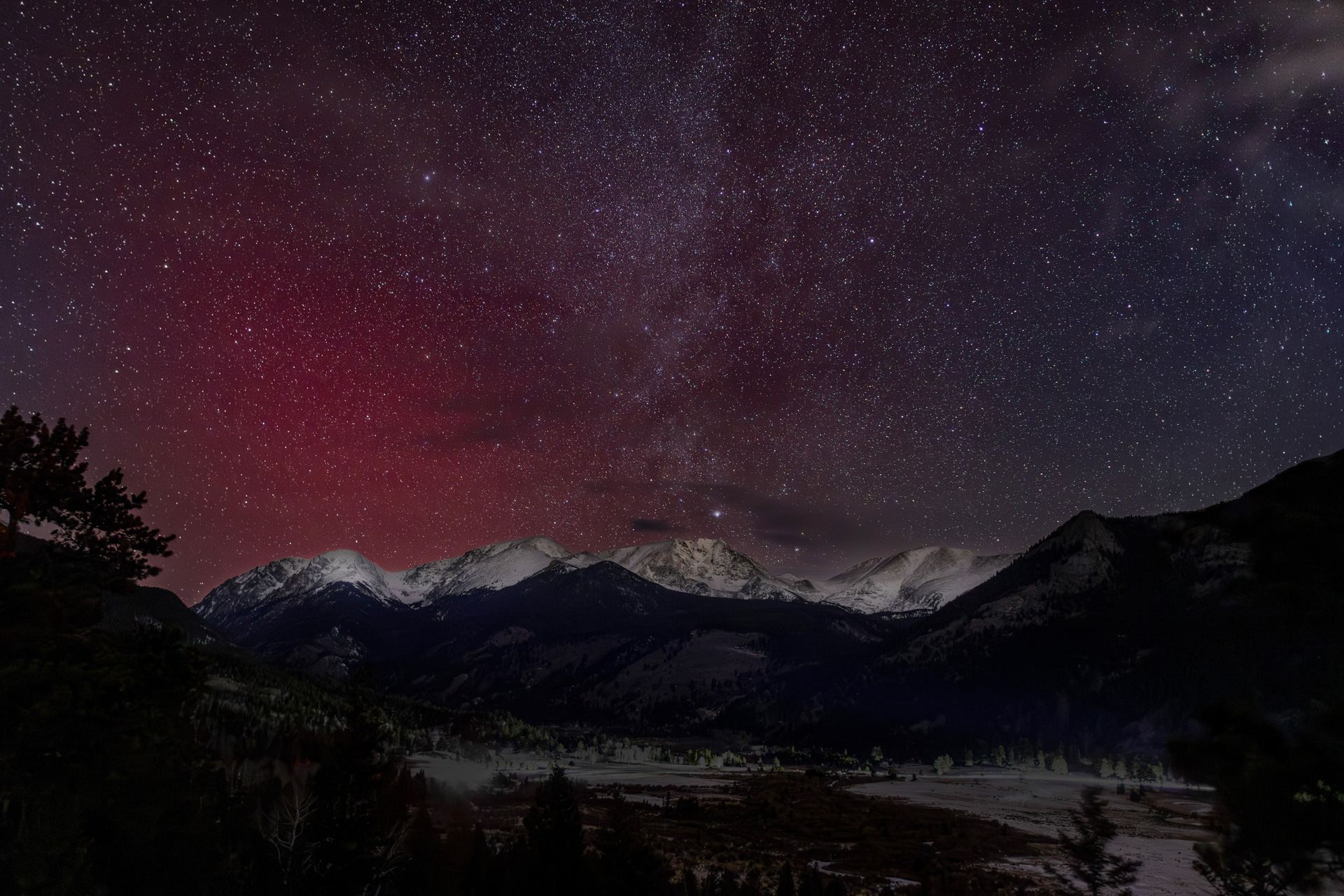
April 2026 - Aurora
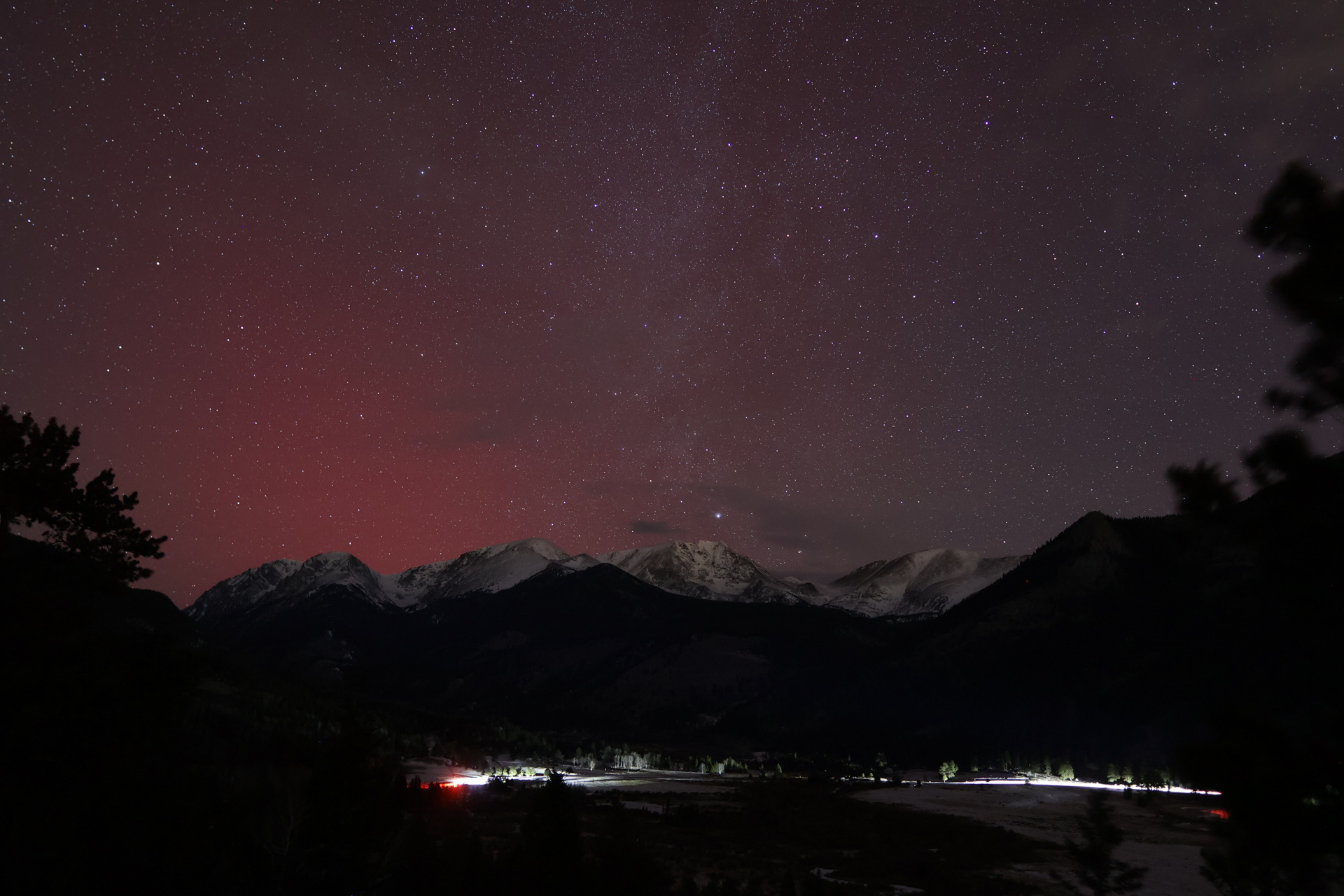
Original
About the Image(s)
Canon R50 (my hiking camera)
24mm f/1.6 Sigma Art Lens
13 second ISO 1250
This is an image of the Aurora Borealis over Rocky Mountain National Park on January 19 of this year. This is looking Northwest out over the Mummy Range. There is a very faint atmospheric haze which makes some of the brighter stars slightly fuzzy.
I used my usual night sky post processing
techniques which doesn’t use Adobe Denoise because A.D. creates bridges between faint stars which is a defect in the software.
7 comments posted
Personally, I've never had the chance to experience the Northern Lights, so it's always special to see images like this-your photo looks really beautiful, thanks for sharing. Posted: 04/03/2026 03:08:58
Removing the shoreline lights really helped focus my eye on the sky lights and mountain top. Nicely done. Posted: 04/04/2026 19:37:01
I had no experience in staying late at night in the cold to capture anything in the sky. The only comment I have is that this is a very beautiful night photography, and you had good post-processing. Posted: 04/06/2026 17:36:43
Such a beautiful image, so other-worldly. I didn't pick up that it was red from the Northern Lights.
I'd be tempted to open the shadows just a bit in the mountain range, but you are a master of this, so I'm gonna guess your version would be better than any changes I might suggest? Posted: 04/08/2026 23:09:25
I'd be tempted to open the shadows just a bit in the mountain range, but you are a master of this, so I'm gonna guess your version would be better than any changes I might suggest? Posted: 04/08/2026 23:09:25
Opening the shadows is a great idea but it wouldn't look natural. It was very dark and you couldn't see to walk around there. It was a moonless night and away from city lights. So I tried to open up the shadows a bit and I think the image kind of falls apart. What do you think? Posted: 04/09/2026 00:56:40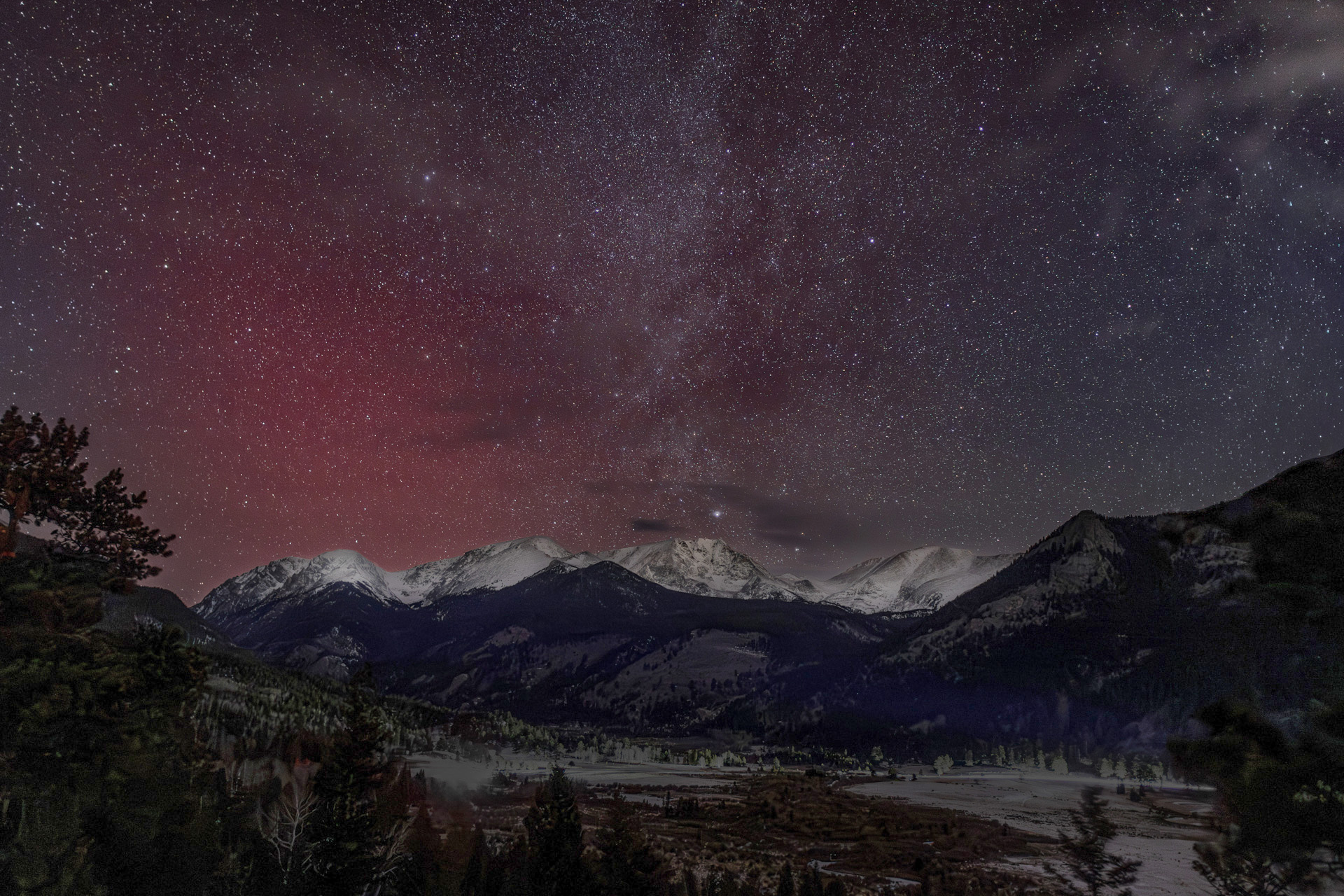
I agree that opening the shadows didn't work. I knew you would have tried that before you kept the valley that dark! Posted: 04/17/2026 01:46:32
It is very nice to have included the Rocky Mountains. Here in the States, the auroras are usually so faint that only the retina's rods, which do not register color, respond. Thus, our eyes will see faint sploches in the sky, but our cameras will reveal their true color. I went to Finland in January to see the auroras, where I was lucky enough to see auroras in full color with my naked eye. Perhaps I'll post on of my resulting photos. Posted: 04/14/2026 16:14:28