Pierre Williot
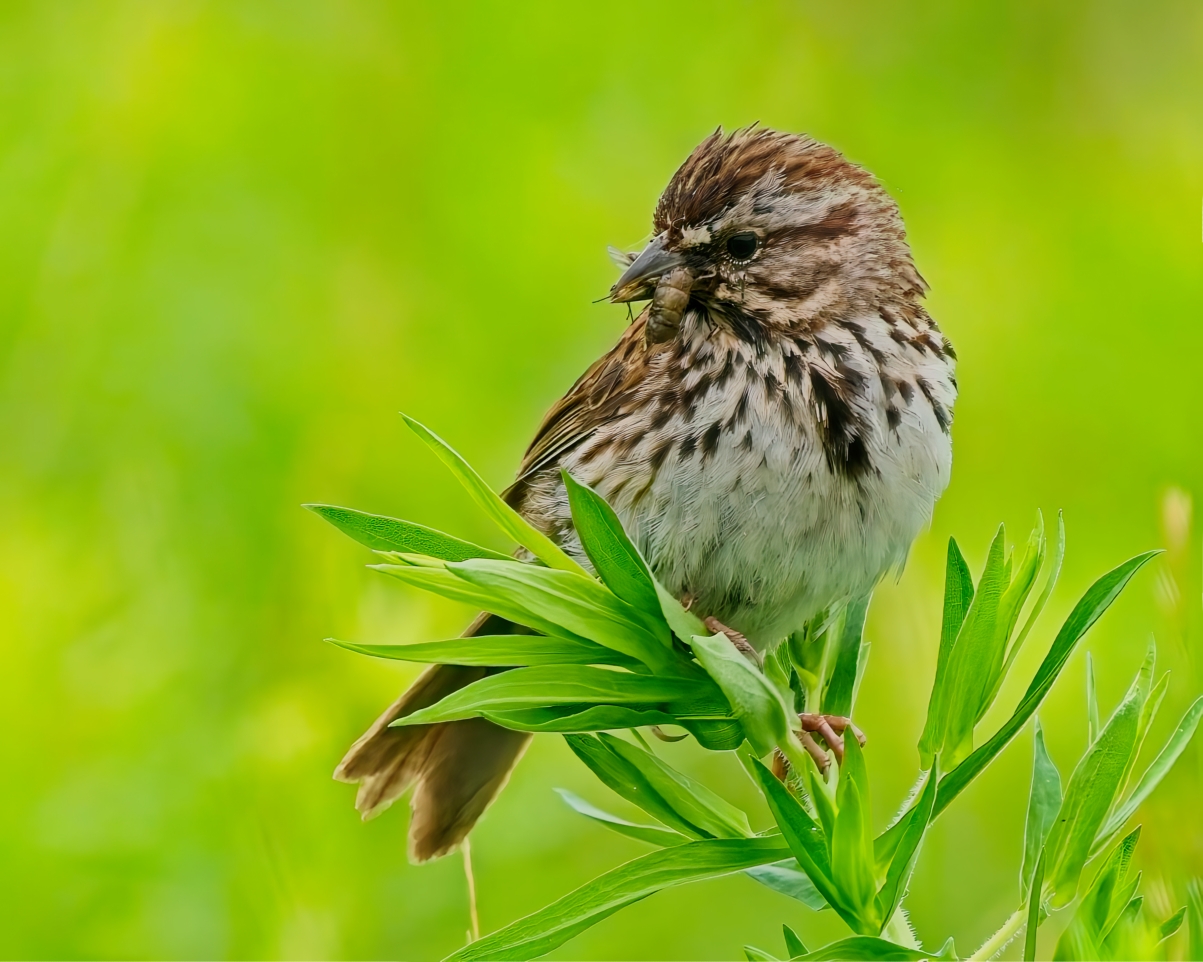
August 2026 - Busy Song Sparrow catching insects for its brood
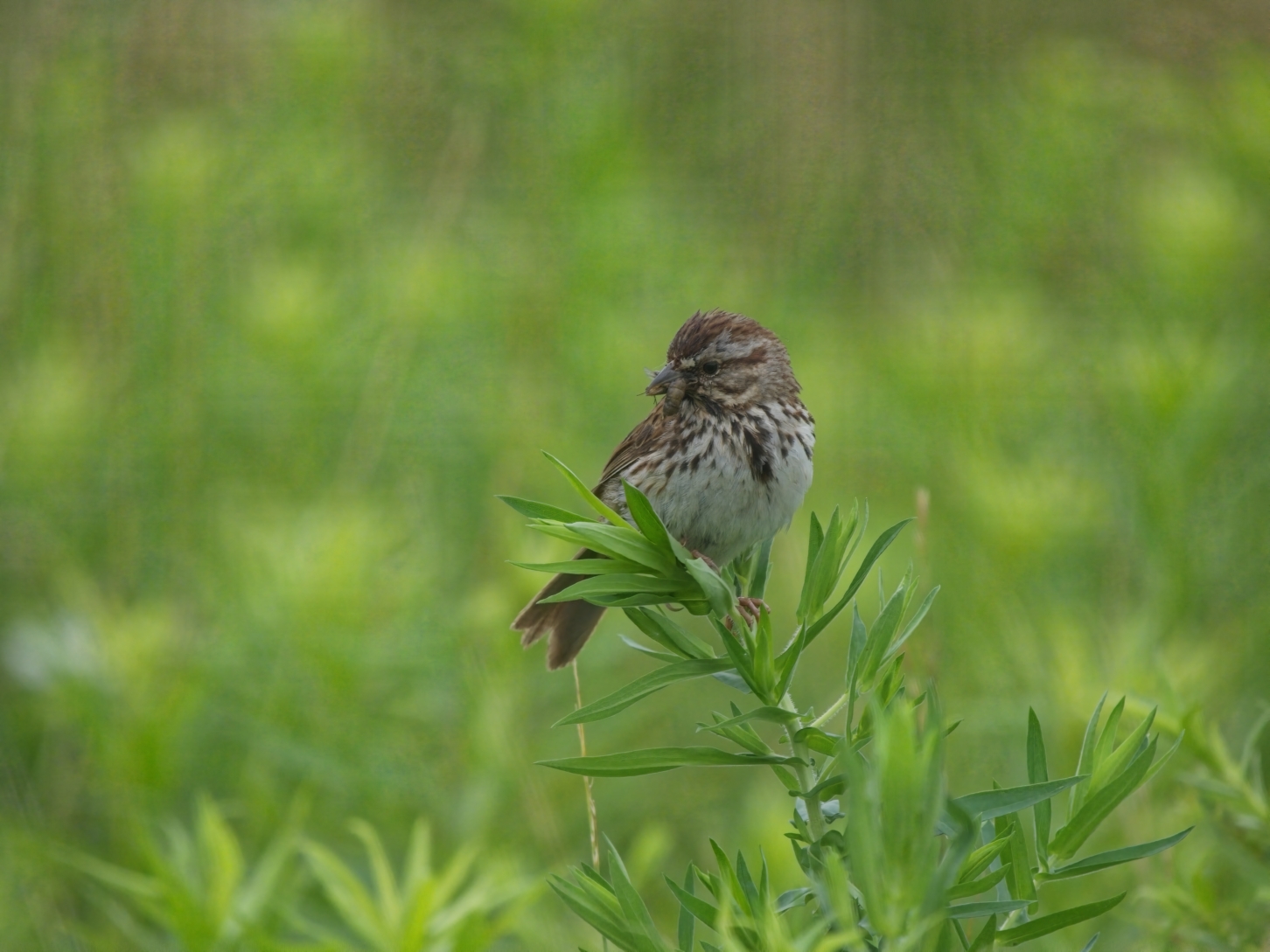
Original
About the Image(s)
Busy Song Sparrow catching insects for its brood.
Equipment: OM1Markii camera, OM 150-400mm TC lens, Hand held
Set-up: 500 mm (1,000 mm full frame equivalent), ISO 1600, 1/1250 sec, f/5.6, EV 0
Post processing using ON1PhotoRaw.
9 comments posted
Pierre,
This is a timely capture of the sparrow having a bug snack. Maybe I would tone down the brightness of the background a bit. Posted: 08/03/2026 16:53:27
This is a timely capture of the sparrow having a bug snack. Maybe I would tone down the brightness of the background a bit. Posted: 08/03/2026 16:53:27
Thanks Dean. I agree. Posted: 08/12/2026 01:58:58
The sparrow stands out perfectly from its background and its position in the frame is great.
I love the angle of its head tilted to the side and the bug in its mouth is a bonus.
My only suggestion is to add an artificial catchlight into the eye. In the old slide days we did this with a small pin prick through the emulsion! Posted: 08/03/2026 17:35:21
I love the angle of its head tilted to the side and the bug in its mouth is a bonus.
My only suggestion is to add an artificial catchlight into the eye. In the old slide days we did this with a small pin prick through the emulsion! Posted: 08/03/2026 17:35:21
Thanks Mervyn,
I like your suggestion. Posted: 08/12/2026 01:59:41
I like your suggestion. Posted: 08/12/2026 01:59:41
I agree with what Dean & Mervyn say.
I always wonder whether it is luck or lots of patience & behavioural knowledge that gets the bug shot. Posted: 08/09/2026 05:50:02
I always wonder whether it is luck or lots of patience & behavioural knowledge that gets the bug shot. Posted: 08/09/2026 05:50:02
Hi Diane,
You are right on!
In wildlife photography, knowing the habits, habitat, diet, breeding season, etc. of each animal is extremely helpful. Furthermore, the wind direction is very important. A perched bird will normally face the wind (easier to take off). Most birds will defecate right before taking off...
It also requires a lot of patience.
I prefer the early morning hours and late afternoon hours when the temperature is not too elevated. Animals will be more active, especially when the babies are out!
For insects, the best time is very early morning as the low temperatures will slow them down - and the dew could be very nice....
There is a say: Luck favors the prepared!
Posted: 08/12/2026 02:10:02
You are right on!
In wildlife photography, knowing the habits, habitat, diet, breeding season, etc. of each animal is extremely helpful. Furthermore, the wind direction is very important. A perched bird will normally face the wind (easier to take off). Most birds will defecate right before taking off...
It also requires a lot of patience.
I prefer the early morning hours and late afternoon hours when the temperature is not too elevated. Animals will be more active, especially when the babies are out!
For insects, the best time is very early morning as the low temperatures will slow them down - and the dew could be very nice....
There is a say: Luck favors the prepared!
Posted: 08/12/2026 02:10:02
Thanks for the extra tips. I've moved to a new home with a big verandah & am currently spotting all of the local birds to hopefully shoot at some time Posted: 08/12/2026 06:59:38
This is beautiful and impressive. I didn't even notice the bug in my first look around but it is a great addition for detail. My only which would be is if we could either darken the subject and main plant so that the plant doesn't blend as much with the background or to mute the background so the plant the bird is on stands out more. But it feels like a very small benefit compared to how strong your photo is! Great submission! Posted: 08/18/2026 00:39:58
Thanks Jacob Posted: 08/18/2026 00:53:18