Lorna Zaback
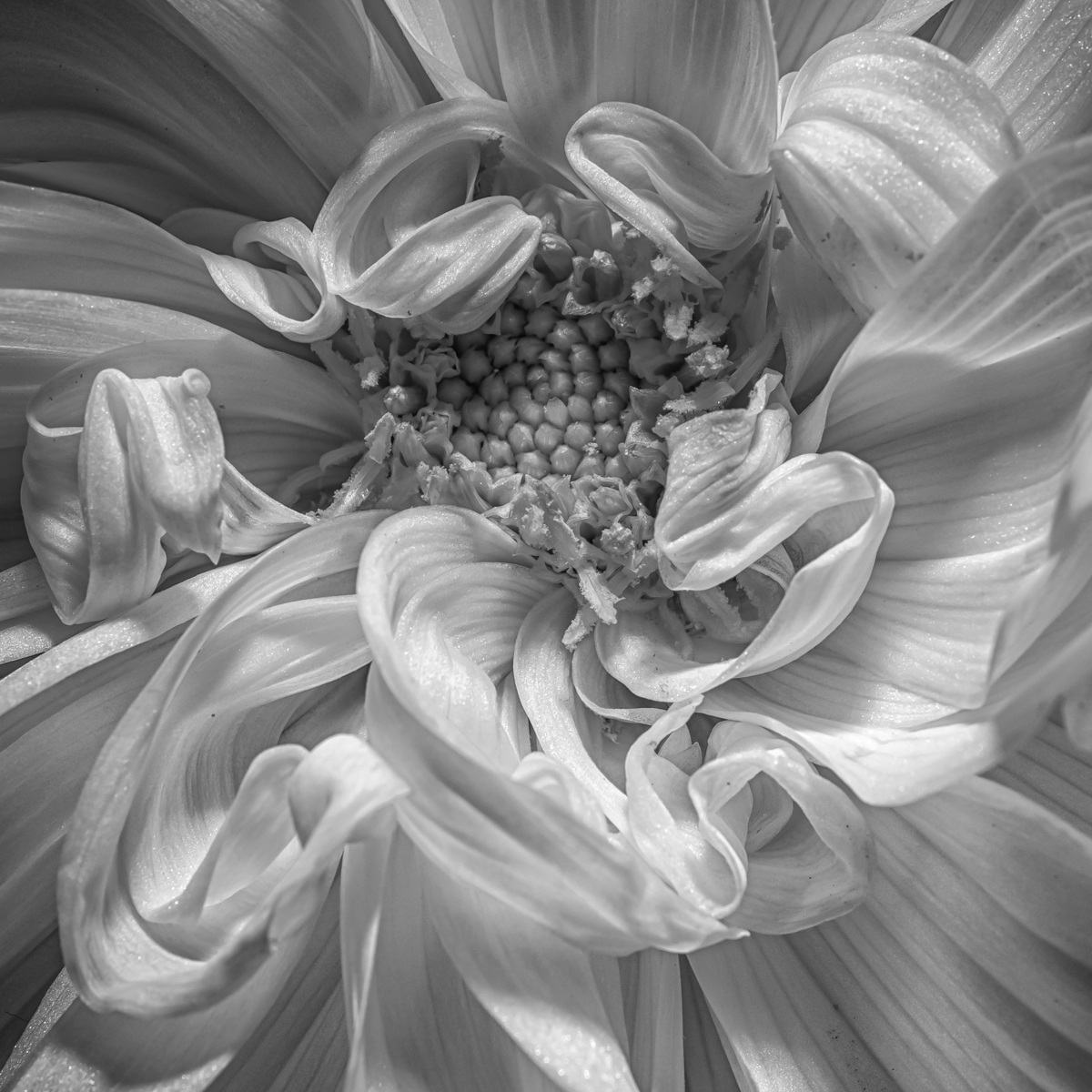
April 2026 - Fading Dahlia
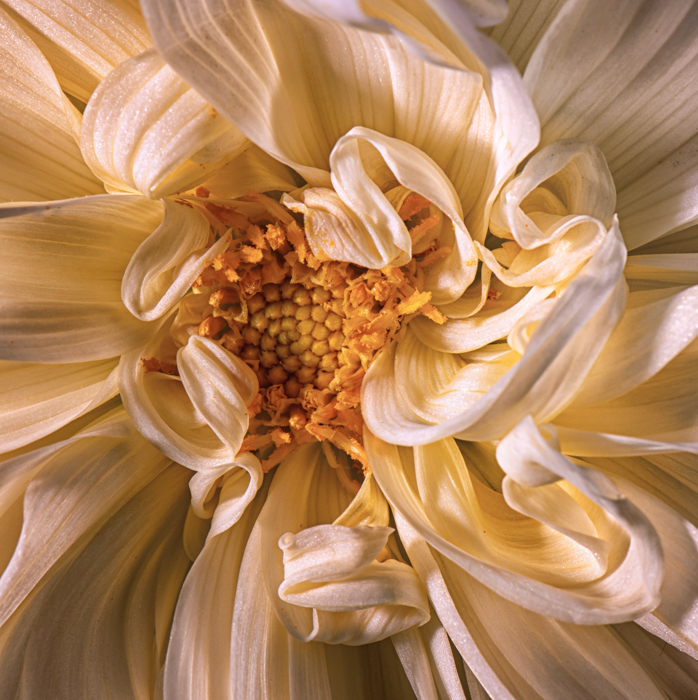
Original
About the Image(s)
I photographed this fading flower as an example for a macro workshop a couple of years ago. Taken with my Nikon macro 105mm lens (on a tripod, of course), with soft indoor lighting provided by a desk lamp. I always find choosing an aperture with a macro lens, the goal being to get exactly the depth of field and selective focus I am happy with - lots of experimenting. I like the hues in the original colour shot but am always curious to see how converting a flower image to BW changes the feeling or the impact. I did some cropping (and a 90 degree clockwise rotation) but very little else. Conversion to monochrome here was done mostly in LR. What do you think?
5 comments posted
Lorna, this is beautiful - both versions; color and monochrome. (I might like the color just a bit better because of its luscious tones of color.) I love the gentle swirls and s. The focus in the center is right on and the square crop fits the subject. My only suggestion is to use the healing brush to remove the several black dots on the petals. Posted: 04/04/2026 20:04:31
Thank you, Cindy, for these kind words. Yes, dust spots...I am usually more vigilant about them - thanks for the heads up. Posted: 04/04/2026 23:36:48
Super texture in the mono particularly. I think you handled the lighting very well also. Well focussed… without bracketing….beautiful image. The colour version would make a lovely backdrop for a product promotion eg cosmetics or jewellery. Posted: 04/06/2026 12:40:47
Thank you, Ger! Posted: 04/07/2026 05:29:36
Lorna, lovely image, the 90 degree rotation places the area of greatest interest in better position in the frame. The tonal range of the original image results in an ethereal midtone image when converted into B&W. Posted: 04/10/2026 01:36:50