Robert Barley
July 2026 - Red
About the Image(s)
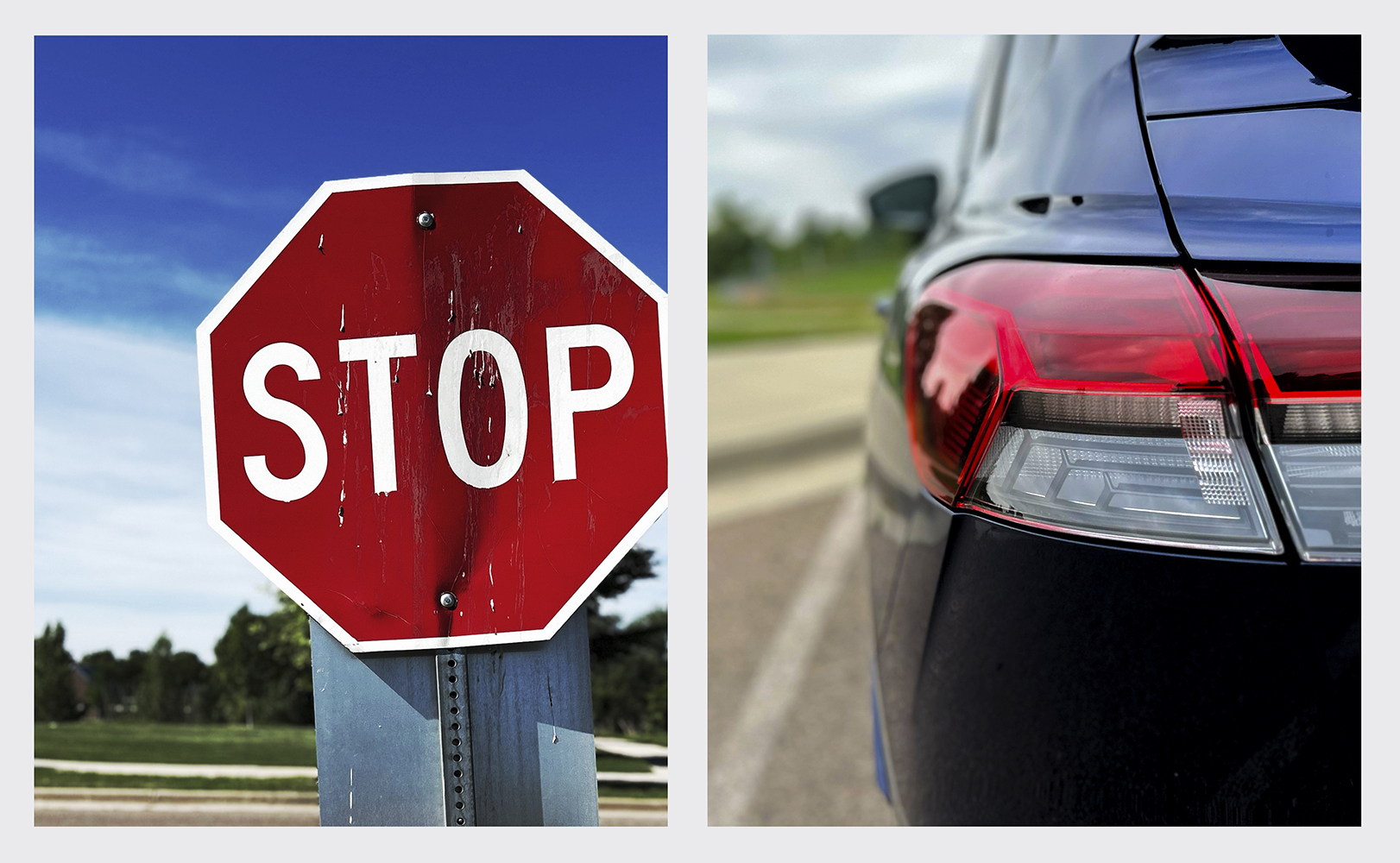
For the last year or so, I've been thinking about the difference between literal and conceptual images. Most of my photos - iPhone and DSLR - are literal. Perhaps a diptych can combine two literal photos to form one conceptual image. Both photos were shot on an iPhone 14 in portrait mode and processed with Snapseed. The mount was created with Photoshop. I'm looking forward to reading your thoughts on literal vs conceptual, and also on the diptych.
10 comments posted
Diptychs are interesting to create. I like this one, especially because of the concept it creates.
The mount is a very nice touch. Posted: 07/02/2026 17:19:00
The mount is a very nice touch. Posted: 07/02/2026 17:19:00
Thank you. I think diptychs, or even triptychs, may be a way to tell more of a story than is possible with a single frame. And I think it can be a challenge for the photographer to create a diptych, so it's good in two ways.
Posted: 07/11/2026 13:10:13
Posted: 07/11/2026 13:10:13
If I viewed these photos separately would think pix of stop sign and part of a red car BUT viewed together they tell a story. I thought the red stain on the stop sign represented blood caused by this car accidentally hitting a pedestrian. The car is not damaged so thought it caused the accident to individual or animal; mostly deer in my area. Very interesting concept of pairing images to tell a story. Posted: 07/08/2026 00:00:04
Excellent! The narrative you have created for this panel is great. It's a description your personal reaction to the images. That's exactly what I hoped for when I made it. Others may react in a different way, and that's good, too. I think drawing a viewer's reaction is the point of a conceptual image. Thanks.
Posted: 07/11/2026 13:19:15
Posted: 07/11/2026 13:19:15
Curious. What was your vision when creating this Diptych? Posted: 07/11/2026 15:16:01
Fair question. On the surface, there are several connections between the two photos: similar colors and compositions; the relationship between a car and a traffic control device. There can be a deeper connection as you have envisioned, and that is what causes the viewer to spend a little time thinking about it. If I explain what I see, it prevents the viewer from engaging in their own interpretation, and the viewer's interpretation is what's important to me.
Posted: 07/11/2026 19:02:14
Posted: 07/11/2026 19:02:14
How about sharing your thoughts on what you saw in combo image once everyone in group has commented as it's part of our learning curve?
Posted: 07/11/2026 23:53:40
Posted: 07/11/2026 23:53:40
The two photographs were intentional. I had an idea for a diptych - two images that complement each other. I made photos that fulfilled my idea. The takeaway is that I can, on rare occasions, do intentional photography. That is personally satisfying. If it happens to help others to think about making intentional images, then that's a bonus.
Posted: 07/13/2026 13:20:00
Posted: 07/13/2026 13:20:00
Well, I have never thought about conceptual photography or what it is. I had to do a Google search on conceptual photography and its characteristics. Still not sure I could explain it or really understand it. I understand what you are conveying with your two images, stop sign vs stop light on car and putting it in a diptych does relate a story or meaning. Posted: 07/11/2026 02:58:23
I do agree that what makes a conceptual image may not be obvious. That's why I've been thinking about it for quite some time. What I can add is that the images I've had accepted for exhibition in galleries have generally been conceptual rather than literal. I'm always hoping to gain a better understanding of it.
Posted: 07/11/2026 13:28:04
Posted: 07/11/2026 13:28:04